
Sinus Lift
Advanced Sinus Lift Solutions For Stable Dental Implants
And Healthy Smiles.
Sinus Lift
Advanced Sinus Lift Solutions
For Stable Dental Implants
And Healthy Smiles.
Home / Treatments / Implantology / Sinus Lift
Sinus Lift
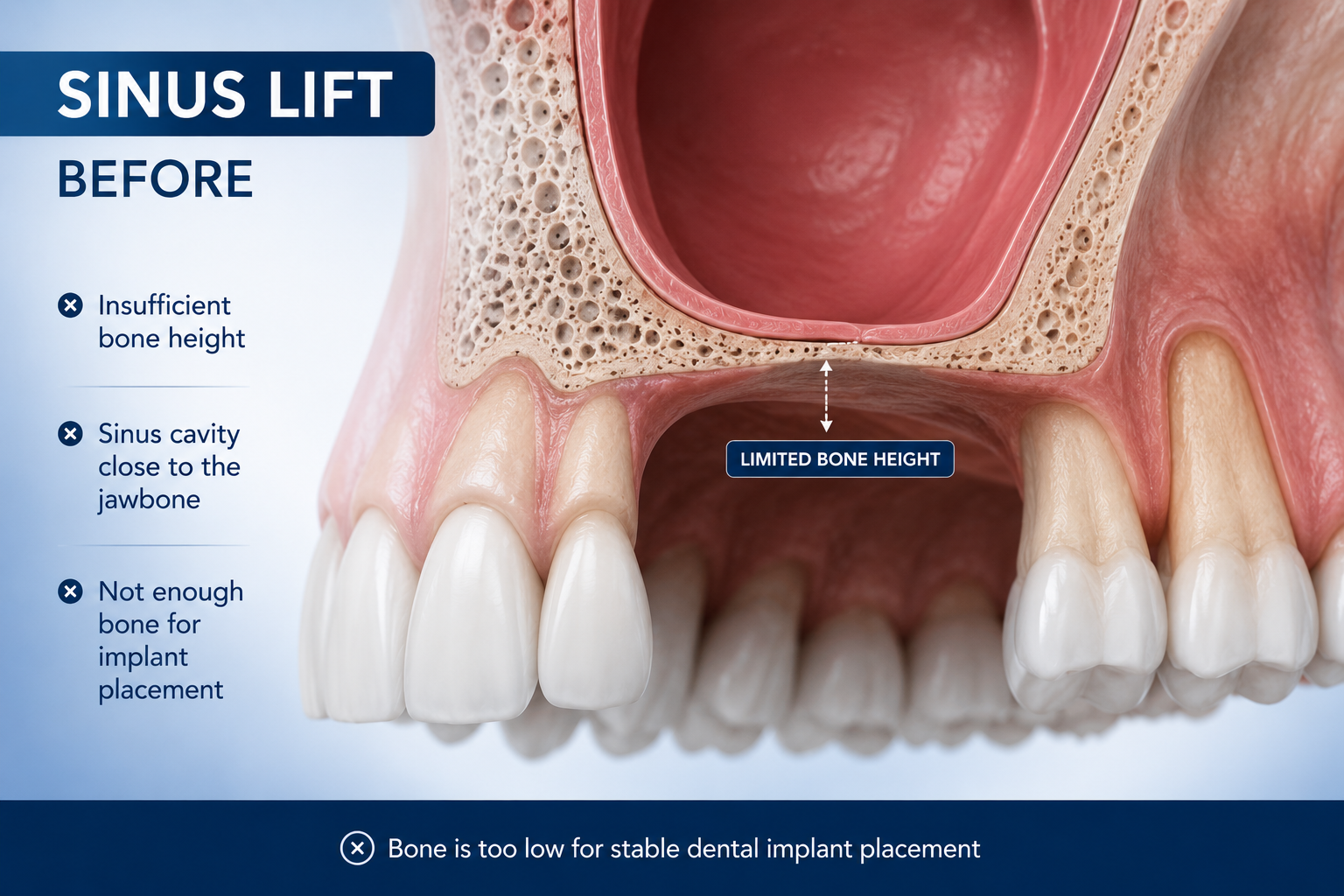
Sinus Lift is an advanced bone augmentation procedure performed to increase bone height in the upper jaw, especially in the back molar region where bone volume is often insufficient for dental implant placement.
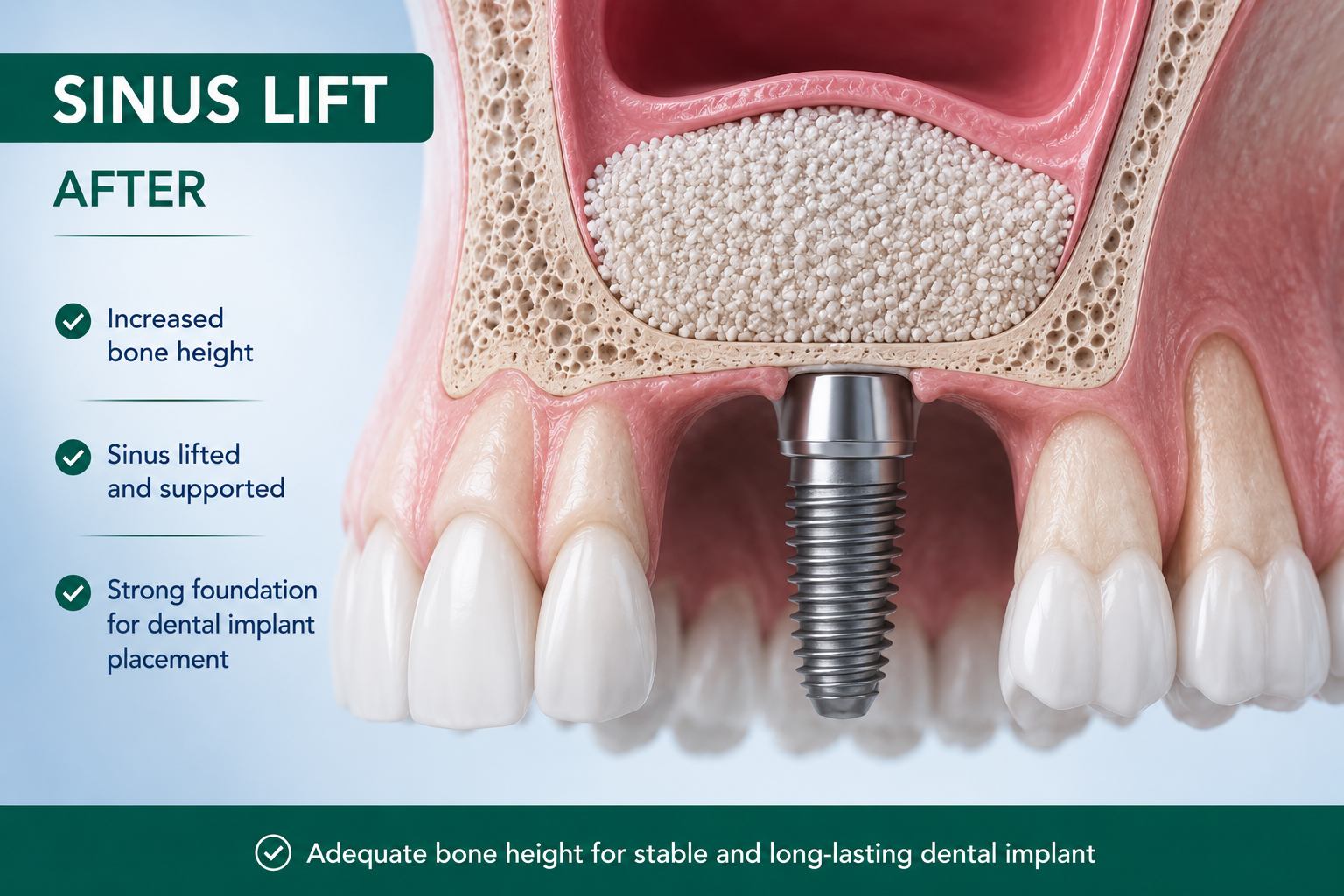
When teeth are missing for a long time, the upper jawbone may gradually shrink while the sinus cavity expands, leaving inadequate bone support for implants. A Sinus Lift gently elevates the sinus membrane and places regenerative bone graft material to rebuild lost bone and create a stable foundation for future implant placement.
Using advanced CBCT-guided diagnostics and precision surgical techniques, Sinus Lift procedures are carefully planned to ensure safe treatment, optimal bone regeneration, improved implant stability, and long-term oral rehabilitation success.
When Can You Benefit From Sinus Lift?
Sinus Lift treatment is recommended for patients with insufficient bone height in the upper jaw, especially in the back molar region where bone loss commonly occurs after tooth extraction or long-term missing teeth. When the sinus cavity expands and the jawbone becomes too thin, there may not be enough support for safe and stable dental implant placement. A Sinus Lift helps rebuild bone volume and creates a stronger foundation for future implants and long-term oral rehabilitation.
Benifits of Maxillofacial Trauma Surgery
- Increases bone height in the upper jaw
- Creates stable support for dental implants
- Advanced regenerative and minimally invasive techniques
- Precision-guided treatment using CBCT imaging
- Enables implant placement in previously unsuitable areas

When Can You Get Treatment?
Sinus Lift treatment is recommended when the upper jawbone does not have enough height or density to safely support dental implants, especially in the back molar region. Bone loss in this area commonly occurs after tooth extraction, long-term missing teeth, periodontal disease, or natural sinus expansion over time. Early treatment helps rebuild bone support, improve implant stability, and prevent further jawbone deterioration.
Treatment Result