
Red & White Lesions
Protecting Oral Health Through Early Lesion Evaluation And Care.
Red & White Lesions
Protecting Oral Health Through
Early Lesion Evaluation And Care.
Home / Treatments / Implantology / Red & White Lesions
Red & White Lesions
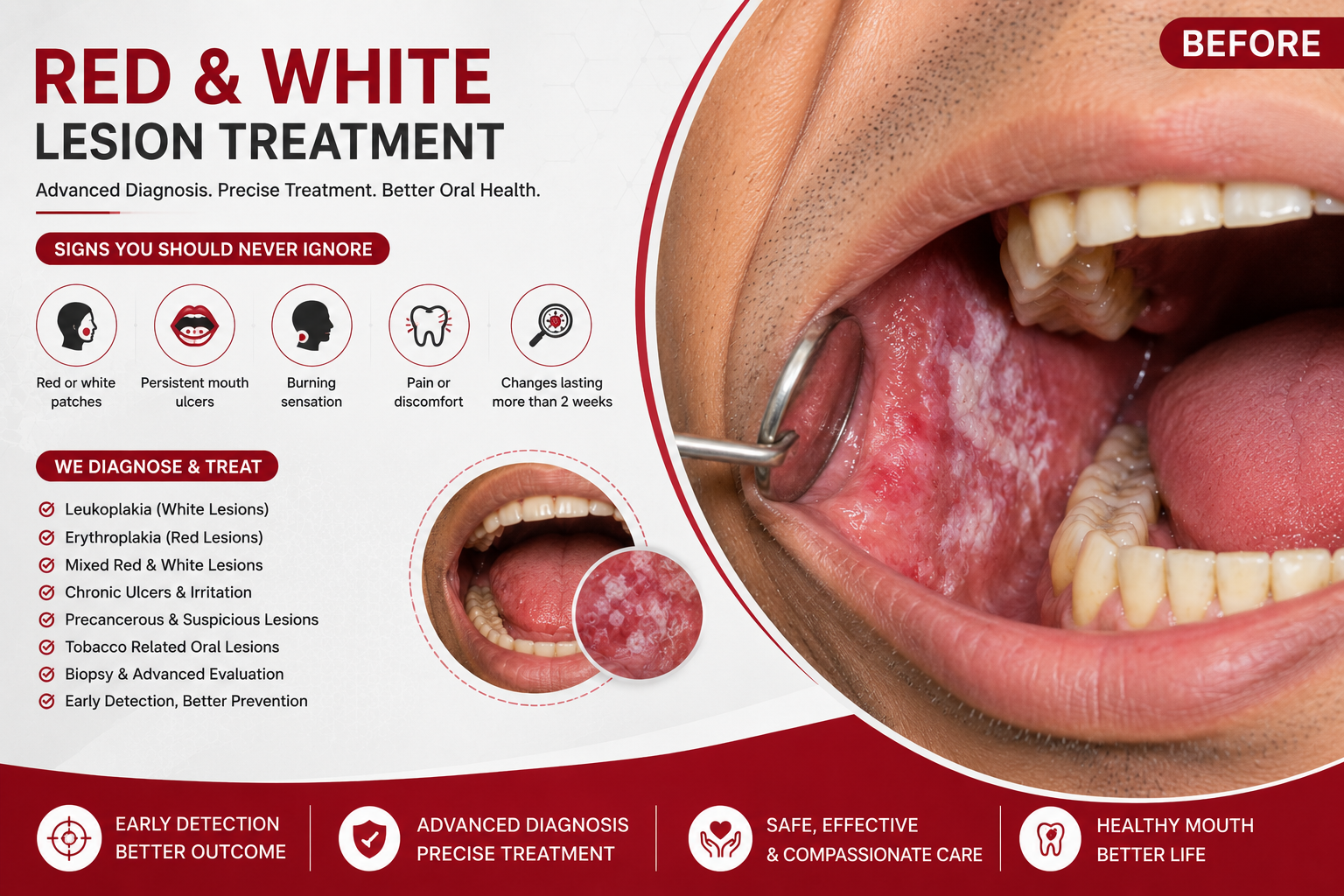
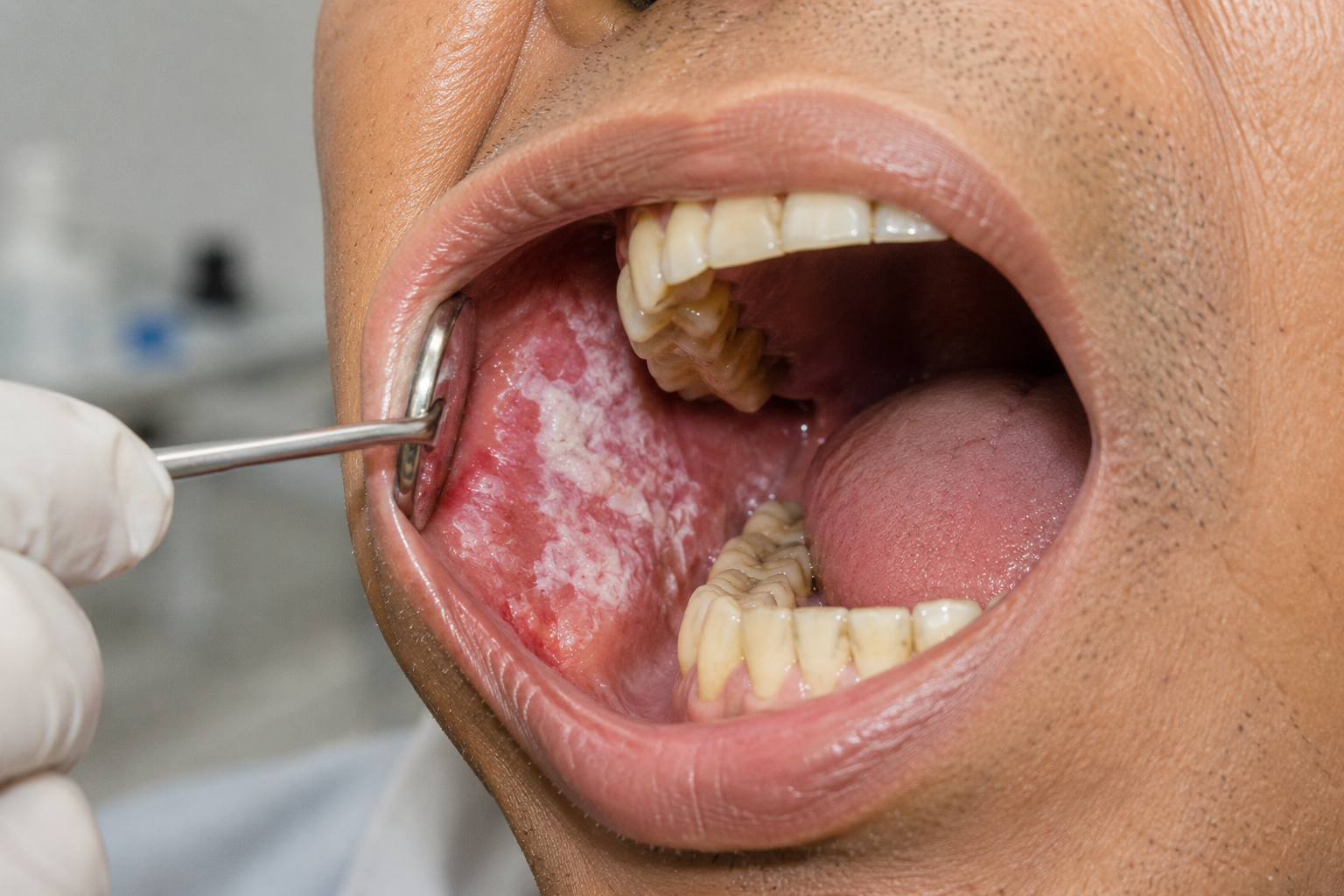
Red & White Lesions are abnormal tissue changes that appear inside the mouth, tongue, cheeks, gums, palate, or lips. These lesions may present as white patches, red areas, mixed red-and-white changes, or irregular oral tissue surfaces.
While some lesions are harmless, others may indicate chronic irritation, infection, precancerous conditions, or early-stage oral cancer. Early diagnosis and professional evaluation are essential for preventing progression and ensuring long-term oral health.
Using advanced oral examination, biopsy procedures, CBCT imaging, and precision surgical techniques, treatment is carefully planned to identify the cause, remove abnormal tissue if necessary, and restore healthy oral function.
When Can You Benefit From Red & White Lesions?
Red & White Lesion treatment is beneficial for patients experiencing abnormal patches, tissue discoloration, ulcers, or unusual changes inside the mouth, tongue, cheeks, gums, or lips that may indicate irritation, infection, precancerous conditions, or early oral disease. Many oral lesions appear painless in the early stages, making professional evaluation essential for accurate diagnosis and timely treatment before complications develop.
Type of Red & White Lesions
- Early detection of abnormal tissue changes
- Prevents progression to serious oral conditions
- Reduces discomfort and oral irritation
- Improves long-term oral health outcomes
- Customized treatment planning for each patient
- Supports confidence and overall oral wellness

When Can You Get Treatment?
Treatment for Red & White Lesions should be considered whenever abnormal oral patches, persistent discoloration, or unusual tissue changes remain present for an extended period or begin affecting comfort, eating, or oral health.
Some lesions may develop due to irritation or infection, while others can represent precancerous or potentially serious oral conditions. Early diagnosis and professional evaluation are important for preventing progression and ensuring proper treatment.
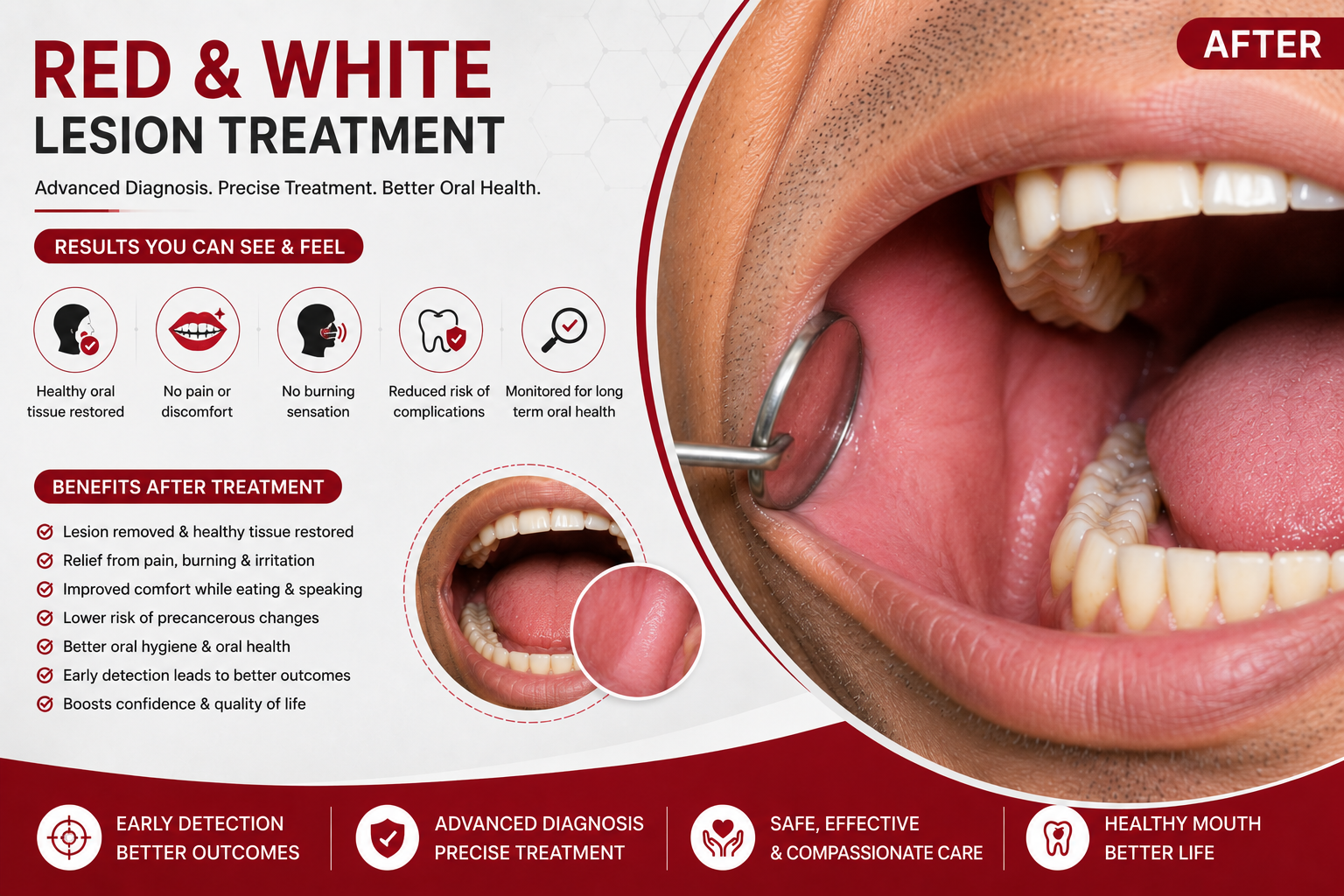
Treatment Result