
Apicectomy
Precision Surgical Treatment Designed To Preserve Your Natural Smile.
Apicectomy
Precision Surgical Treatment
Designed To Preserve Your Natural Smile.
Home / Treatments / Implantology / Apicectomy

Apicectomy
Apicectomy, also known as root-end surgery, is an advanced microsurgical procedure performed to remove infection or inflammation from the tip of a tooth root when conventional root canal treatment alone is not sufficient.
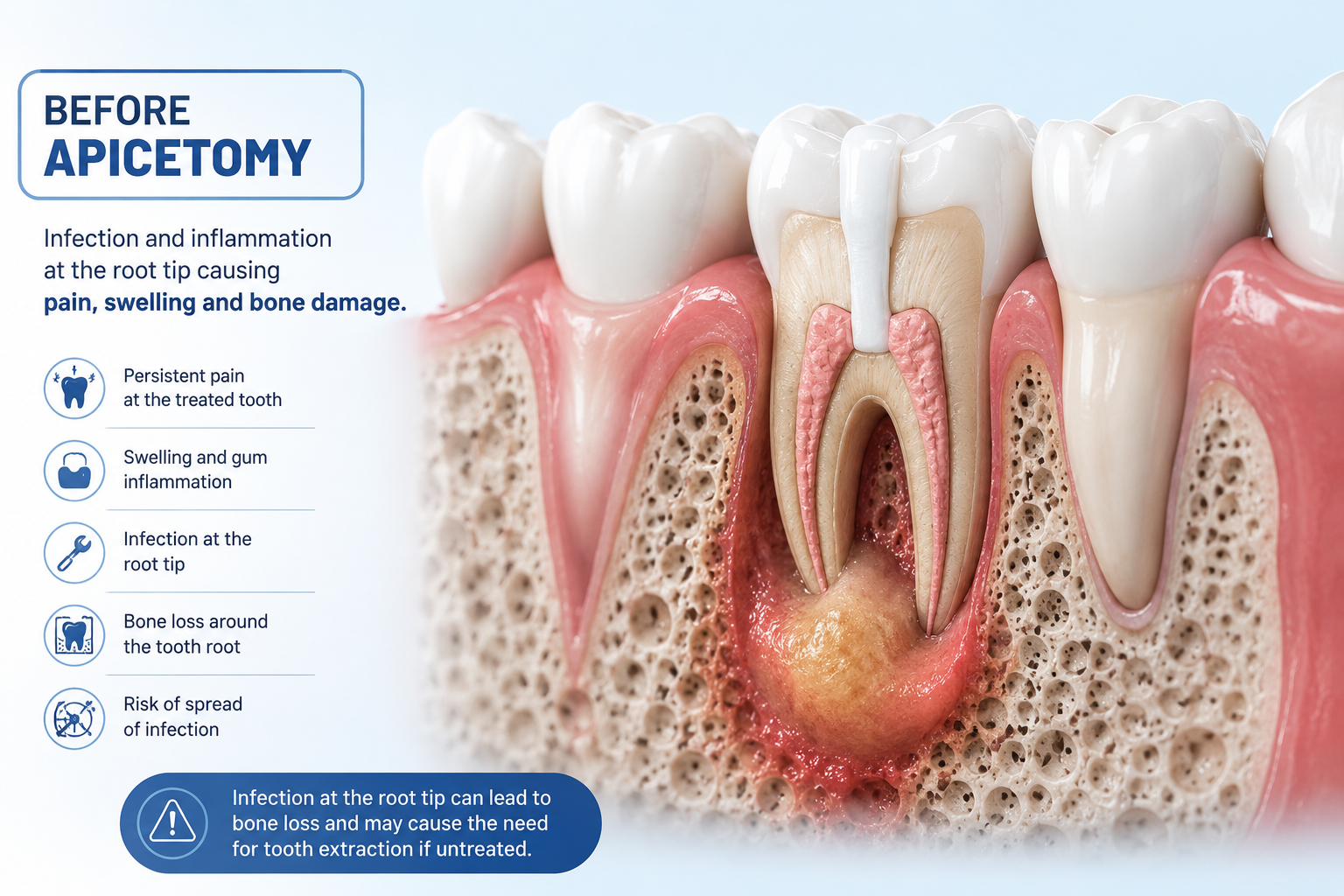
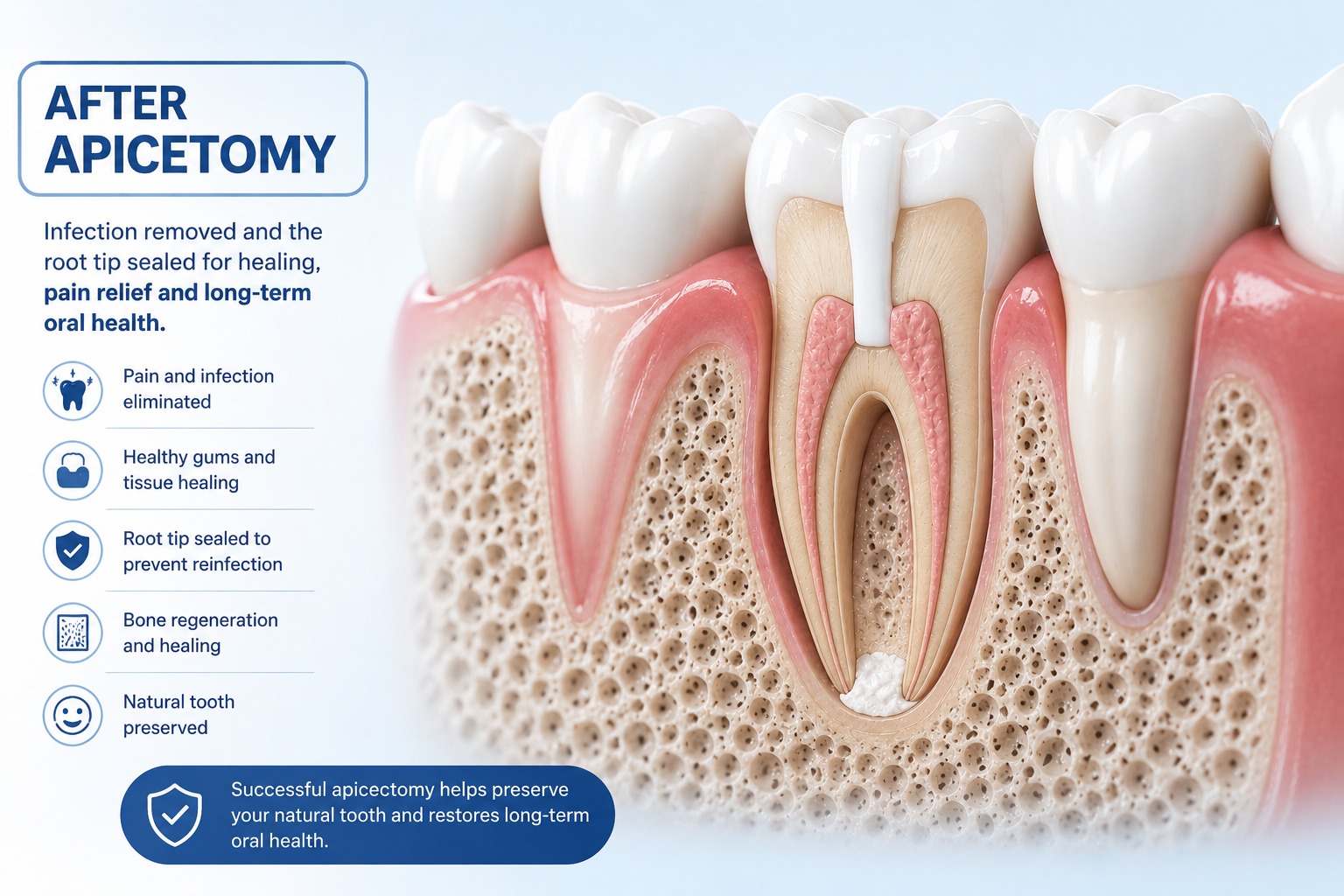
This procedure is commonly recommended for persistent infections, failed root canal treatments, cyst formation, or recurring pain around a previously treated tooth. During the procedure, the infected root tip and surrounding diseased tissue are carefully removed, and the root end is sealed to prevent further infection while preserving the natural tooth.
Using advanced CBCT imaging, magnification, and precision microsurgical techniques, Apicectomy procedures are performed with enhanced accuracy, improved healing, and long-term treatment success.
When Can You Benefit FromApicectomy?
Apicectomy is recommended when infection or inflammation persists at the root tip of a tooth even after a root canal treatment. It is an advanced surgical procedure designed to preserve the natural tooth while eliminating the source of infection.
This treatment helps prevent tooth extraction and protects surrounding bone and tissues from further damage. Early intervention can significantly improve long-term oral health and treatment success.
Benifits of Apicectomy
- Persistent pain after root canal treatment
- Recurring infection near a treated tooth
- Swelling or gum inflammation around the tooth
- Cyst or abscess formation near the root tip
- Infection visible on dental X-rays or CBCT scans
- Repeated failure of conventional endodontic treatment

When Can You Get Treatment?
Apicectomy treatment is recommended when infection or inflammation continues at the root tip of a tooth even after root canal therapy, causing persistent pain, swelling, or recurring dental problems.
The procedure is performed to remove infected tissue and preserve the natural tooth when conventional endodontic treatment is no longer sufficient. Early treatment helps prevent worsening infection, bone damage, and unnecessary tooth extraction.
Treatment Result